

What it promises
Fantasy needs rules more than spectacle. A world with unclear rules has no stakes, however good it looks. In isekai specifically, the audience is here for reborn in another world — break that and nothing else you do lands.
Isekai is a fantasy framework for vertical drama built around reborn in another world. What it promises, how to pace it, and where it breaks.
Isekai is a fantasy framework for vertical drama, built around reborn in another world. It is not a label you attach to a finished story — it is a set of expectations the audience arrives with, and the first ten seconds either meet them or lose them.
Fantasy needs rules more than spectacle. A world with unclear rules has no stakes, however good it looks. That matters more in vertical than anywhere else, because there is no establishing act to hide a weak opening behind. A viewer decides inside three seconds whether this is the thing they came for.
This page covers isekai as a production decision: what the format promises, where the conflict comes from, how to pace it across sixty short episodes, and what usually goes wrong. Everything below is written to be used while outlining, not after.
Genre snapshot
Fantasy
Isekai is a fantasy framework for vertical drama built around reborn in another world. This infographic helps you see the story feeling that should appear from the first episode.
Story promise
Isekai
Viewers should quickly understand the feel of Isekai: the emotional direction is clear, the conflict is readable, and the payoff feels earned.
Visual focus
This should be visible in the opening scene, poster, and first conflict.
Main pressure
Use this pressure to decide which scenes are worth keeping and which ones slow the story down.
Expected payoff
The ending should feel like a clear return on the promise made in the first few seconds.
Opening hooks that fit this genre
1. Open on the cost, before the audience knows what was bought with it.
2. Open on a rule being enforced against someone sympathetic.
3. Open in the ordinary world, one shot before it stops being ordinary.
In practice, a strong genre helps viewers make a fast decision: whether the series feels relevant, whether the conflict is interesting, and whether the next episode is worth watching.
That is why genre is not just a catalogue label. It filters tone, dialogue rhythm, conflict shape, visual style, and the type of cliffhanger that will feel most effective.
This section covers story direction, opening hooks, conflict pressure, and how to keep characters feeling human.
Fantasy needs rules more than spectacle. A world with unclear rules has no stakes, however good it looks. In isekai specifically, the audience is here for reborn in another world — break that and nothing else you do lands.
The engine runs on a rule that cannot be broken meeting a need that cannot wait. Write one sentence describing that situation in your version. If it needs an "and then", you have a plot rather than an engine, and the series will run out around episode twelve.
One rule demonstrated per episode, and never a rule that is only explained. Committed and consistent — the audience is reading the image for information about the world.
Aim the series at the price finally being paid by the person who set the rule. Write that scene yourself — it is the one the audience will judge the whole series by, and it is worth an hour of your time even if nothing else is.
The useful question about isekai is not "what is it" but "what does it demand". It demands a world whose rules are strange, knowable and enforced, and everything that does not serve that is decoration.
One rule demonstrated per episode, and never a rule that is only explained. Most series in this framework fail in the middle third, where the original obstacle has been cleared and nothing has replaced it. Plan the second obstacle before you start writing the first.
In a 60–120 second episode, structure is the only thing carrying you. A scene that does not change something is a scene that can be cut, and in this format it should be.
Bagian ini dibuat seperti panduan langkah demi langkah agar kreator tidak berhenti di ide besar saja. Dengan struktur yang runtut, genre tidak terasa seperti label katalog, tetapi menjadi pegangan praktis untuk mengembangkan serial dari premis sampai episode.
Step 1
State a rule that cannot be broken meeting a need that cannot wait in one sentence, in your own story's terms.
Step 2
One turn per episode, each ending on an unanswered question that the next episode opens on.
Step 3
Design the characters before rendering anything — this framework leans on recognition across dozens of episodes.
Step 4
Write the the price finally being paid by the person who set the rule scene by hand.
40 to 80 vertical episodes of 60–120 seconds. Under 30 the escalation feels rushed; past 80 the engine usually needs a second one beside it.
Yes, and most strong series do. Pick one as the engine and the other as the texture — two engines fight each other and the series loses its centre.
No. It is a starting frame. The bible, the episode map and every shot list are editable, and any scene can be regenerated on its own.

Billionaire CEO is a romance framework for vertical drama built around the boss and the assistant. What it promises, how to pace it, and where it breaks.
See more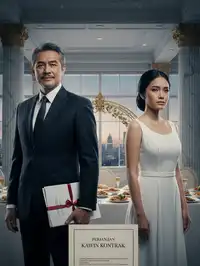
Contract Marriage is a romance framework for vertical drama built around signed first, fell after. What it promises, how to pace it, and where it breaks.
See moreTurn a genre into a premise, an episode map, shot-level scripts and rendered scenes — in one workspace.
Isekai is a fantasy framework for vertical drama built around reborn in another world. What it promises, how to pace it, and where it breaks.
Isekai is a fantasy framework for vertical drama, built around reborn in another world. It is not a label you attach to a finished story — it is a set of expectations the audience arrives with, and the first ten seconds either meet them or lose them.
Fantasy needs rules more than spectacle. A world with unclear rules has no stakes, however good it looks. That matters more in vertical than anywhere else, because there is no establishing act to hide a weak opening behind. A viewer decides inside three seconds whether this is the thing they came for.
This page covers isekai as a production decision: what the format promises, where the conflict comes from, how to pace it across sixty short episodes, and what usually goes wrong. Everything below is written to be used while outlining, not after.
สรุป genre
Fantasy
Isekai is a fantasy framework for vertical drama built around reborn in another world. อินโฟกราฟิกนี้ช่วยให้เห็นอารมณ์ของเรื่องที่ควรปรากฏตั้งแต่ episode แรก
สัญญาของเรื่อง
Isekai
ผู้ชมควรรู้สึกถึง Isekai ได้เร็ว: อารมณ์ชัด conflict อ่านง่าย และ payoff สมเหตุผล
โฟกัสภาพ
สิ่งนี้ควรรู้สึกได้ในฉากเปิด poster และ conflict แรก
แรงกดดันหลัก
ใช้แรงกดดันนี้เลือกว่าฉากไหนควรเก็บ และฉากไหนทำให้เรื่องช้าลง
Payoff ที่รออยู่
ตอนจบควรเป็นคำตอบของสัญญาที่เปิดไว้ในไม่กี่วินาทีแรก
Hook เปิดเรื่องที่เหมาะกับ genre นี้
1. Open on the cost, before the audience knows what was bought with it.
2. Open on a rule being enforced against someone sympathetic.
3. Open in the ordinary world, one shot before it stops being ordinary.
In practice, a strong genre helps viewers make a fast decision: whether the series feels relevant, whether the conflict is interesting, and whether the next episode is worth watching.
That is why genre is not just a catalogue label. It filters tone, dialogue rhythm, conflict shape, visual style, and the type of cliffhanger that will feel most effective.
This section covers story direction, opening hooks, conflict pressure, and how to keep characters feeling human.
Fantasy needs rules more than spectacle. A world with unclear rules has no stakes, however good it looks. In isekai specifically, the audience is here for reborn in another world — break that and nothing else you do lands.
The engine runs on a rule that cannot be broken meeting a need that cannot wait. Write one sentence describing that situation in your version. If it needs an "and then", you have a plot rather than an engine, and the series will run out around episode twelve.
One rule demonstrated per episode, and never a rule that is only explained. Committed and consistent — the audience is reading the image for information about the world.
Aim the series at the price finally being paid by the person who set the rule. Write that scene yourself — it is the one the audience will judge the whole series by, and it is worth an hour of your time even if nothing else is.
The useful question about isekai is not "what is it" but "what does it demand". It demands a world whose rules are strange, knowable and enforced, and everything that does not serve that is decoration.
One rule demonstrated per episode, and never a rule that is only explained. Most series in this framework fail in the middle third, where the original obstacle has been cleared and nothing has replaced it. Plan the second obstacle before you start writing the first.
In a 60–120 second episode, structure is the only thing carrying you. A scene that does not change something is a scene that can be cut, and in this format it should be.
Bagian ini dibuat seperti panduan langkah demi langkah agar kreator tidak berhenti di ide besar saja. Dengan struktur yang runtut, genre tidak terasa seperti label katalog, tetapi menjadi pegangan praktis untuk mengembangkan serial dari premis sampai episode.
Step 1
State a rule that cannot be broken meeting a need that cannot wait in one sentence, in your own story's terms.
Step 2
One turn per episode, each ending on an unanswered question that the next episode opens on.
Step 3
Design the characters before rendering anything — this framework leans on recognition across dozens of episodes.
Step 4
Write the the price finally being paid by the person who set the rule scene by hand.
40 to 80 vertical episodes of 60–120 seconds. Under 30 the escalation feels rushed; past 80 the engine usually needs a second one beside it.
Yes, and most strong series do. Pick one as the engine and the other as the texture — two engines fight each other and the series loses its centre.
No. It is a starting frame. The bible, the episode map and every shot list are editable, and any scene can be regenerated on its own.
Billionaire CEO is a romance framework for vertical drama built around the boss and the assistant. What it promises, how to pace it, and where it breaks.
See moreContract Marriage is a romance framework for vertical drama built around signed first, fell after. What it promises, how to pace it, and where it breaks.
See moreTurn a genre into a premise, an episode map, shot-level scripts and rendered scenes — in one workspace.