Skip to content
Genre directory/Emperor's Love
Romance

What is Genre "Emperor's Love" in Redrama?

Emperor's Love is a romance framework for vertical drama built around romance inside the palace. What it promises, how to pace it, and where it breaks.

What is Genre "Emperor's Love" in Redrama?

Emperor's Love is a romance framework for vertical drama, built around romance inside the palace. It is not a label you attach to a finished story — it is a set of expectations the audience arrives with, and the first ten seconds either meet them or lose them.

Romance is the largest audience in vertical drama and the least forgiving. The relationship has to be legible in the first shot, and every episode has to move it or cost it. That matters more in vertical than anywhere else, because there is no establishing act to hide a weak opening behind. A viewer decides inside three seconds whether this is the thing they came for.

This page covers emperor's love as a production decision: what the format promises, where the conflict comes from, how to pace it across sixty short episodes, and what usually goes wrong. Everything below is written to be used while outlining, not after.

Genre snapshot

Romance

What must stand out in Genre "Emperor's Love"?

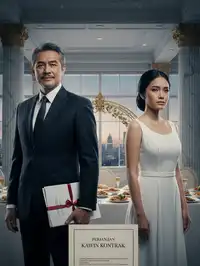
Emperor's Love is a romance framework for vertical drama built around romance inside the palace. This infographic helps you see the story feeling that should appear from the first episode.

Story promise

Emperor's Love

Viewers should quickly understand the feel of Emperor's Love: the emotional direction is clear, the conflict is readable, and the payoff feels earned.

Visual focus

Open on the moment two people are forced into the same room and cannot leave it.

This should be visible in the opening scene, poster, and first conflict.

Main pressure

The conflict runs on status, obligation and a decision neither of them is free to make yet.

Use this pressure to decide which scenes are worth keeping and which ones slow the story down.

Expected payoff

Aim the series at the admission, the sacrifice, or the line one of them finally crosses.

The ending should feel like a clear return on the promise made in the first few seconds.

Opening hooks that fit this genre

1. Open on the meeting neither of them chose, with the reason they cannot walk away already visible.

2. Open on the secret that makes the relationship impossible, before the audience knows who is keeping it.

3. Open on the ending of a different relationship — a breakup, a proposal, a wedding — that redirects the story in one shot.

Why Genre "Emperor's Love" matters for short drama production

In practice, a strong genre helps viewers make a fast decision: whether the series feels relevant, whether the conflict is interesting, and whether the next episode is worth watching.

That is why genre is not just a catalogue label. It filters tone, dialogue rhythm, conflict shape, visual style, and the type of cliffhanger that will feel most effective.

  • Emperor's Love tells the audience what kind of story this is without a line of exposition, which buys you the whole first episode for the story itself.
  • A specific framework makes covers, episode titles and captions easier to write, because you already know who you are writing them for.
  • It sets a healthy creative boundary: which conflicts matter, which emotions to escalate, and which payoff will actually satisfy.
  • It shortens revision. Every decision can be checked against the promise instead of against taste.
  • It gives a production a shared vocabulary, so a second writer joining at episode 20 knows what the series is trying to be.

How to read this genre before writing episodes.

This section covers story direction, opening hooks, conflict pressure, and how to keep characters feeling human.

What it promises

Romance is the largest audience in vertical drama and the least forgiving. The relationship has to be legible in the first shot, and every episode has to move it or cost it. In emperor's love specifically, the audience is here for romance inside the palace — break that and nothing else you do lands.

Where the conflict comes from

The engine runs on status, obligation and a decision neither of them is free to make yet. Write one sentence describing that situation in your version. If it needs an "and then", you have a plot rather than an engine, and the series will run out around episode twelve.

Pacing and look

One escalation of intimacy or one setback per episode — never both, and never neither. Warm key, shallow depth, faces filling the frame. The story is happening on someone's face.

Aiming the payoff

Aim the series at the admission, the sacrifice, or the line one of them finally crosses. Write that scene yourself — it is the one the audience will judge the whole series by, and it is worth an hour of your time even if nothing else is.

Key points to remember.

The useful question about emperor's love is not "what is it" but "what does it demand". It demands two people who should not end up together, ending up together, against resistance, and everything that does not serve that is decoration.

One escalation of intimacy or one setback per episode — never both, and never neither. Most series in this framework fail in the middle third, where the original obstacle has been cleared and nothing has replaced it. Plan the second obstacle before you start writing the first.

In a 60–120 second episode, structure is the only thing carrying you. A scene that does not change something is a scene that can be cut, and in this format it should be.

  • Promise: two people who should not end up together, ending up together, against resistance.
  • Pacing: One escalation of intimacy or one setback per episode — never both, and never neither.
  • Look: Warm key, shallow depth, faces filling the frame. The story is happening on someone's face.

How to use this genre in production.

Bagian ini dibuat seperti panduan langkah demi langkah agar kreator tidak berhenti di ide besar saja. Dengan struktur yang runtut, genre tidak terasa seperti label katalog, tetapi menjadi pegangan praktis untuk mengembangkan serial dari premis sampai episode.

  1. Step 1

    1. Fix the engine

    State status, obligation and a decision neither of them is free to make yet in one sentence, in your own story's terms.

  2. Step 2

    2. Break to episodes

    One turn per episode, each ending on an unanswered question that the next episode opens on.

  3. Step 3

    3. Lock the cast

    Design the characters before rendering anything — this framework leans on recognition across dozens of episodes.

  4. Step 4

    4. Direct the payoff

    Write the the admission scene by hand.

A romance framework built around romance inside the palace.

How many episodes does a emperor's love series need?

40 to 80 vertical episodes of 60–120 seconds. Under 30 the escalation feels rushed; past 80 the engine usually needs a second one beside it.

Can I combine emperor's love with another framework?

Yes, and most strong series do. Pick one as the engine and the other as the texture — two engines fight each other and the series loses its centre.

Do I have to follow this structure?

No. It is a starting frame. The bible, the episode map and every shot list are editable, and any scene can be regenerated on its own.

Keep exploring Redrama genres with guides, ideas, and insights.

Start your series.

Turn a genre into a premise, an episode map, shot-level scripts and rendered scenes — in one workspace.